2 SPOTS LEFT

Benin & Ghana

  • 6 January 2027
  • 9 Days Experience
  • From 6,900 US$
  • Max. 8 People
Photo Gallery

This very special photo tour has been curated and designed by Harry Fisch, founder of Nomad Photo Expeditions, who has been enthroned as Prince and Minister of the Kingdom of Agonlin, Benin. His familiarity with local culture, his relationships with priests, elders, and nomadic communities, open doors no standard itinerary ever reaches — giving us access to an interior Benin that few outsiders ever witness.

Highlights

  • The Voodoo Festival, Ouidah The single annual gathering when devotees from Benin, Haiti, and Brazil converge for a three-mile procession — the only event on the planet where Vodun belief performs itself at full, public scale.
  • A Private Reception with the King With a measure of good fortune, we may be granted the privilege of an audience with King Angolin, an exceptional cultural encounter of great photographic significance.
  • The Gate of No Return, Ouidah
    The coastal monument marking the embarkation point of enslaved Africans — site of the festival’s climactic beach rituals, spinning straw fetishes, and white-painted ceremonial dancers in full ecstatic motion.
  • Animist Village, Lake Aheme
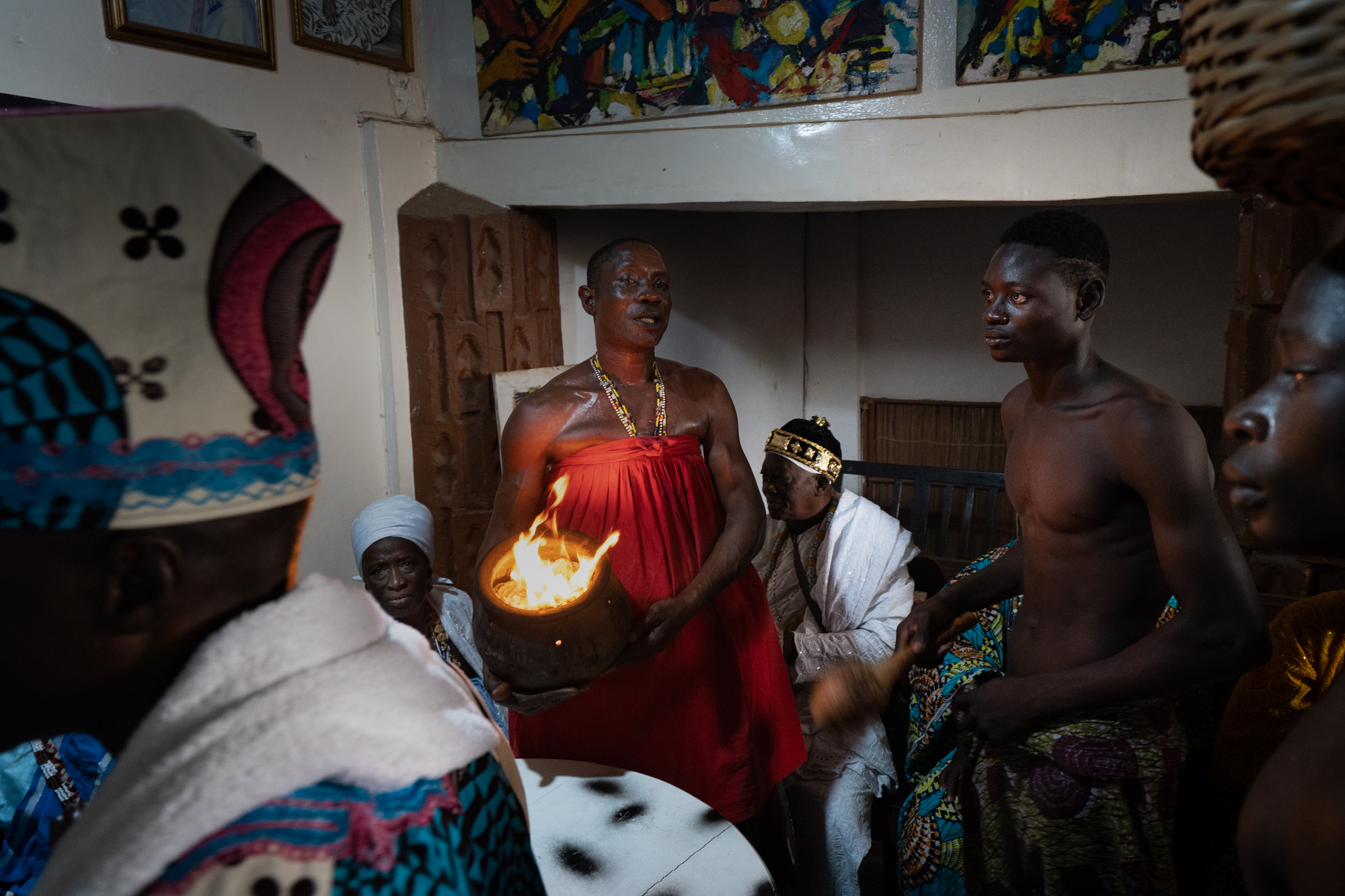
    Communities preserving Vodun in its oldest, most unmediated form: ritual sacrifice, dance ceremonies connecting the living with the dead, and ancestral customs carried intact across generations and oceans.
  • Fulani Nomad Camp, Agonlin Foothills
    Semi-nomadic communities in breathtaking red-earth landscapes — ritual tattooing and elaborate hairdressing as living visual languages, accessible through on-foot village visits and a shared picnic in the field.
JOIN THIS EXPEDITION
Benin, Ghana and the  Voodoo Festival

SUMMARY

This trip has been curated and designed by Harry Fisch, founder of Nomad Photo Expeditions, who was enthroned as Prince and Minister of the Kingdom of Angolin, Benin in January 2023. His familiarity with local culture, his relationships with priests, elders, and nomadic communities, open doors no standard itinerary ever reaches — giving us access to an interior Benin that few outsiders ever witness.

What Are We Going to Experience

At the heart of this journey is the Voodoo Festival of Ouidah — one of the most visually extraordinary public events in Africa. Thousands of devotees from Benin, Haiti, Brazil, and neighboring Togo gather for a three-mile procession from the city to the sea. We witness the Supreme Priest Daagbo Hounon Houna II perform ritual sacrifice beneath the sacred iroko. Griots perform acrobatics on tall poles. Devotees in vibrant fabrics dance ceaselessly to drumbeats. Men with faces painted white lead ritual groups through a magnificent, joyful chaos.

Beyond the festival, the itinerary moves into Benin’s animist interior: the Lake Aheme communities where ritual chicken sacrifice and dance ceremonies still unite the living with the dead; the Fulani nomad camps of the Agonlin foothills, where ritual tattooing and elaborate hairdressing are daily visual languages; and the remote Holi tribal villages near Ketou, where facial scarification marks lineage and devotion. UNESCO-listed Abomey offers the royal palaces and art museums of the Dahomey kings.

Ganvié — Africa’s Venice — places us among the Tofi fishermen who have lived on Lake Nokoué since the 18th century. The fetish markets of Bohicon, the Afro-Brazilian streets of Porto Novo, and the Atlantic coast fishermen between Grand Popo and Cotonou complete a photographic journey of remarkable cultural range and depth.

ITINERARY

Day-to-Day

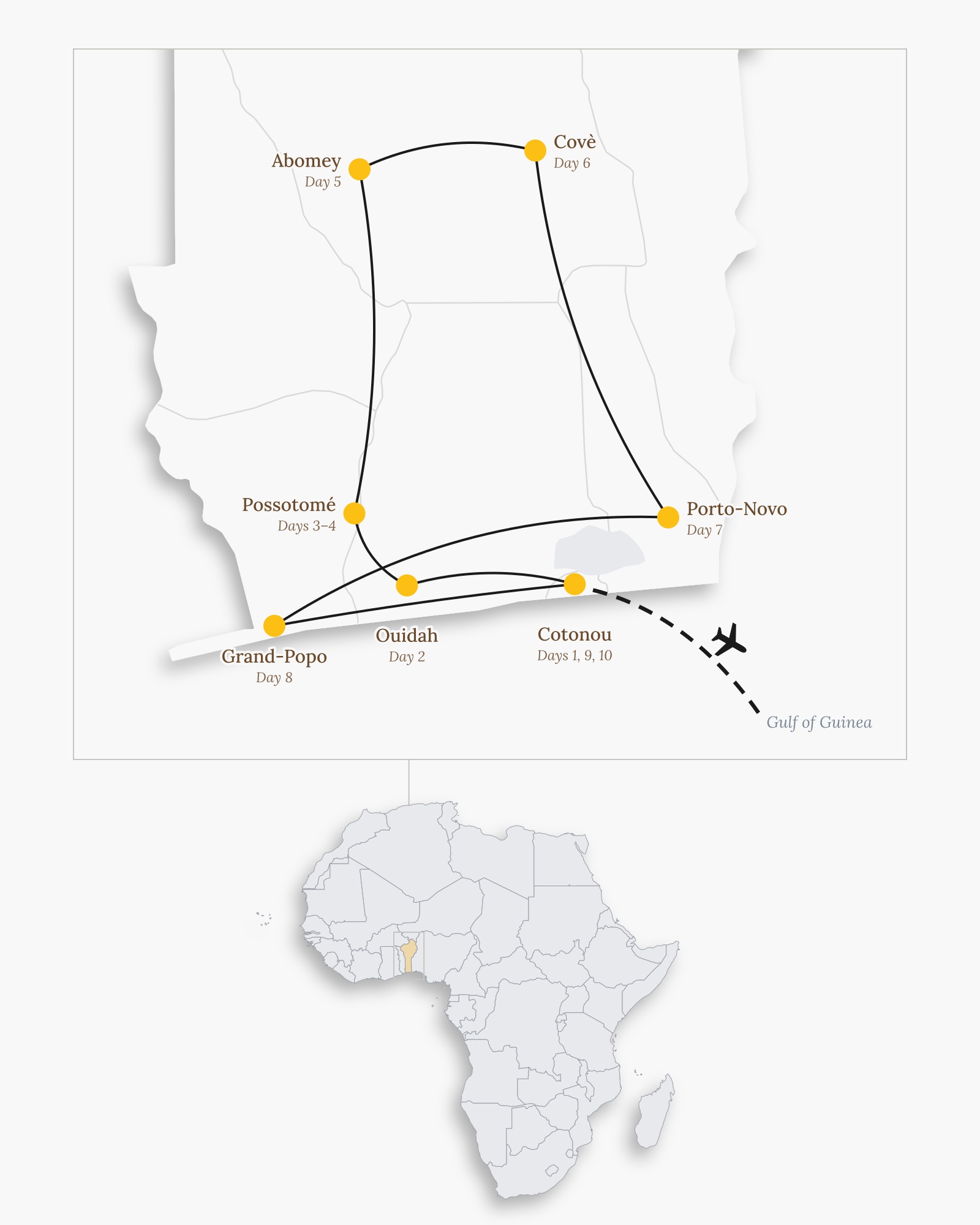
Day 1 Arrival in Cotonou

Upon arrival at the international airport in Cotonou, a Nomad Photo Expeditions representative will be waiting to welcome us and escort us on a complimentary transfer to the hotel. This first day is entirely free — an acclimatization day designed to help us settle into the heat, the energy, and the rhythms of West Africa. Cotonou, the economic capital of Benin, is alive with zemidjans — motorcycle taxis weaving through the streets — market vendors, and the layered sounds of a city in constant motion. There is no formal agenda; this is a day for open eyes and first light, for slow walks and early impressions.

Photographic Opportunities:

Cotonou’s streets offer immediate visual texture: the density of motorcycle traffic, colorful market stalls, vendors, and the faces of a city going about its daily business. Though no formal session is scheduled, the urban energy invites spontaneous portraiture and street photography from the first moments.

Day 2 Cotonou to Ouidah

An introductory visit through Cotonou’s city center and central market opens our day, before we head toward Ouidah ahead of the festival. In Ouidah, our photographic immersion begins at three sacred sites: the Temple of the Snakes — a sanctuary housing dozens of royal pythons, revered in Voodoo tradition; the Route of the Slaves — the harrowing path walked by enslaved people to the coast; and the Holy Forest, a dense, spiritually charged grove. This is the eve of the Voodoo Festival, and the city is already in motion. Pilgrims arrive from Benin, Haiti, Brazil, and Togo. Small groups dance through the streets; individuals make quiet offerings; mothers carry babies on their backs and baskets on their heads; men beat drums as informal processions weave through the old colonial streets.

Photographic Opportunities:

Pre-festival Ouidah: pilgrims in procession, drummers, offering-bearers in traditional dress. The Temple of the Snakes offers extraordinary close-up portraiture in sacred context. The Route of the Slaves and Holy Forest provide symbolic, atmospheric backdrops — filtered forest light, weathered monuments, and human faces preparing for tomorrow’s great celebration.

Day 3-4 Ouidah / Bopa / Possotomé — Festival Day

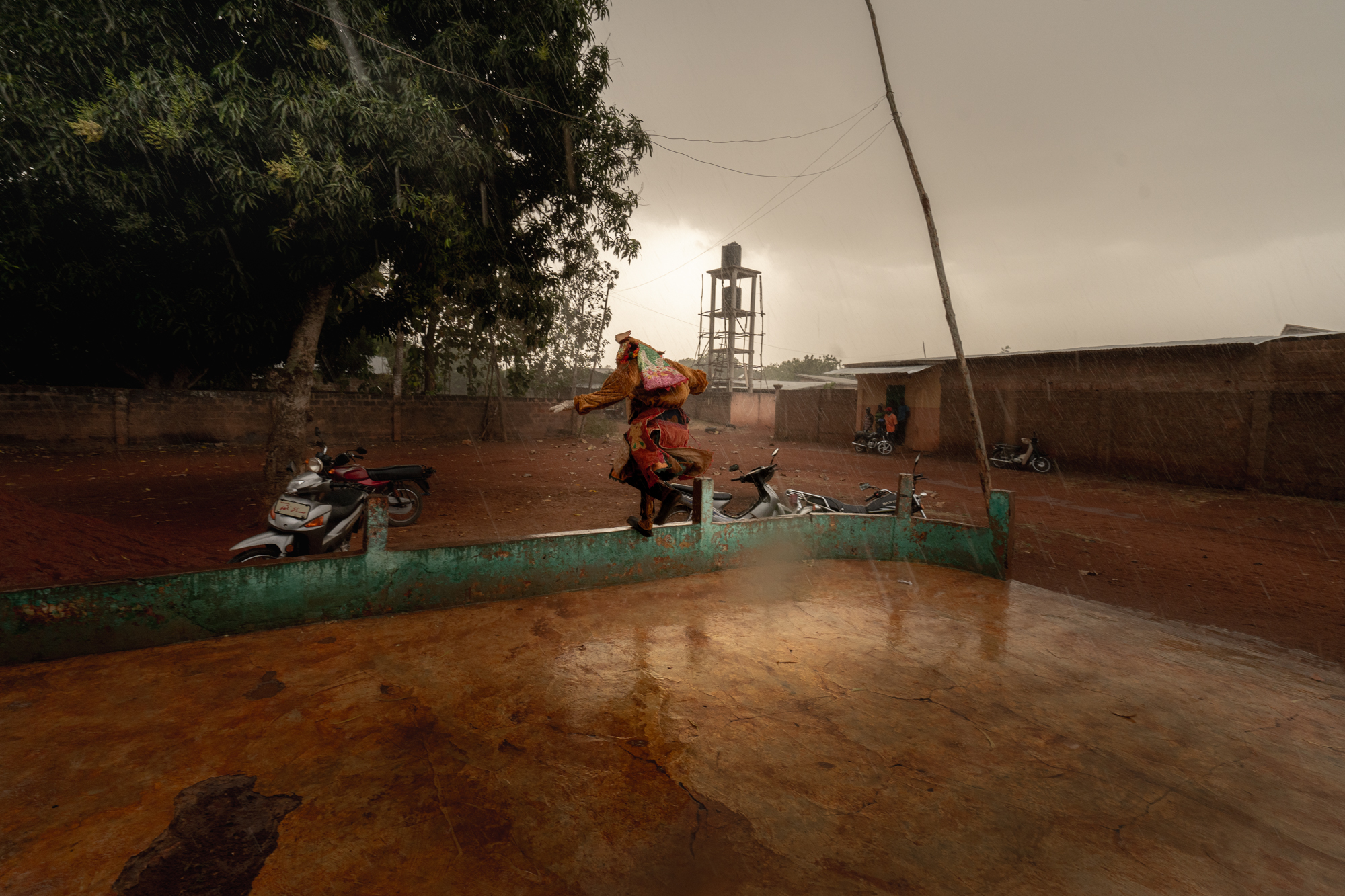
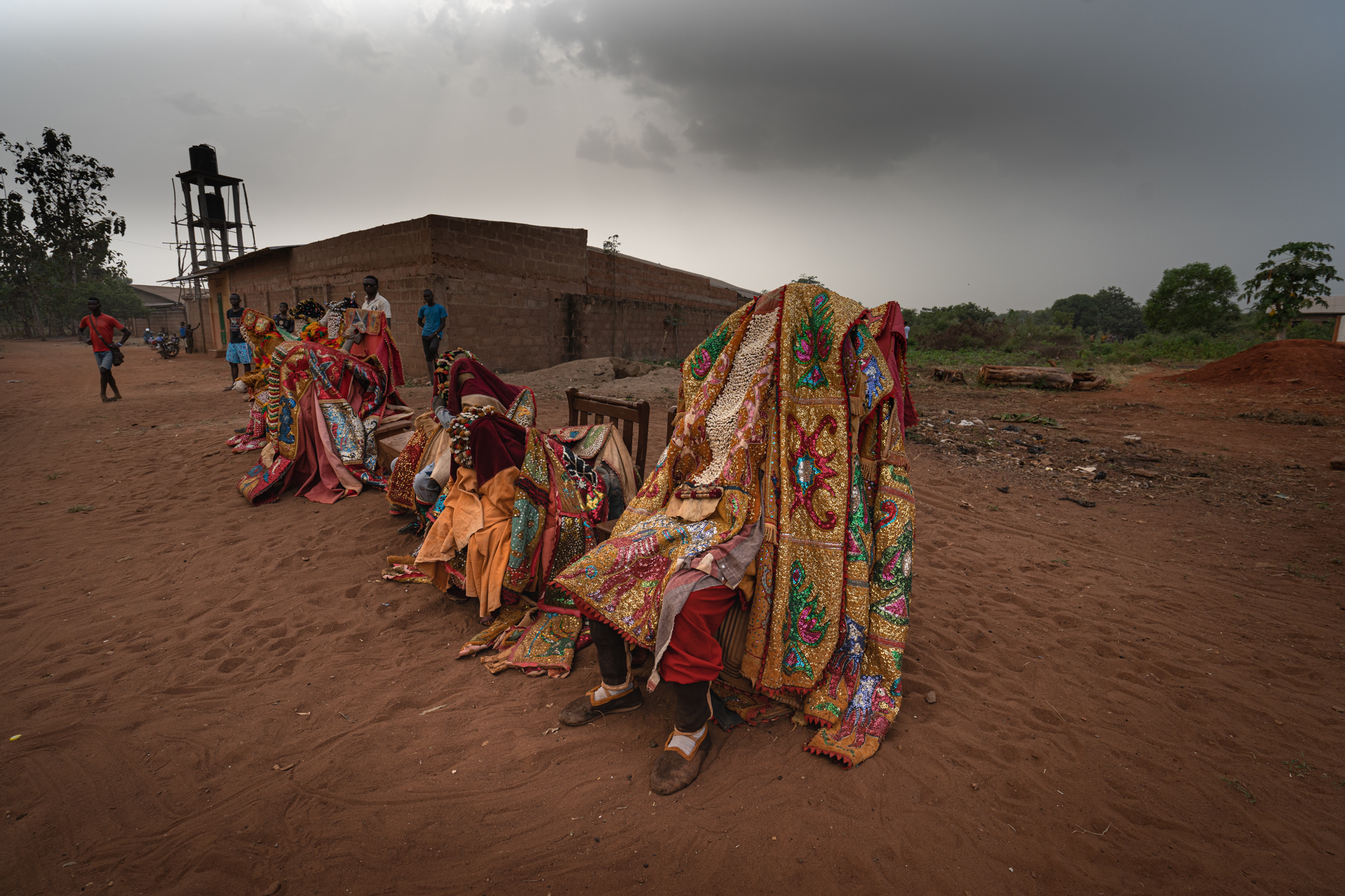
Today is the Voodoo Festival, and via our local guide — an acolyte himself — we enter the heart of the celebration. The three miles from city center to coast become a procession of color, noise, and devotion: masked men, priests, and devotees of every caste move in an archaic, joyful cavalcade, unhurried and endlessly photogenic. High-caste participants are carried beneath enormous ceremonial umbrellas. At the beach, beside the historic Gate of No Return, griots perform acrobatics on tall poles; straw fetishes — representations of the deities — spin wildly across the sand. Drums beat without pause, and around them devotees in vibrant fabrics dance ceaselessly. Men with faces painted white, bedecked with amulets, and recently initiated acolytes reel in ecstasy. We spend the entire morning photodocumenting this singular event.

In the afternoon, we travel to Lake Aheme — the sacred lake of Benin’s Vodun communities — to visit an animist village where ritual chicken sacrifice and dance ceremonies still unite the living with the dead. Contact is facilitated by our local guide. We then stop at Bopa to photograph the high priest and his temple before ending the day in Possotomé.

Photographic Opportunities:

The procession: ceremonial umbrellas, masked priests, white-painted faces, vibrant fabrics — full range from wide crowd scenes to intimate portraits. At the beach: spinning straw fetishes, griots on poles, dancing devotees. The Gate of No Return as backdrop. At Lake Aheme: ritual ceremony and community portraiture. The High Priest of Bopa: a rare, opportunity.

Day 5 Possotomé to Abomey

At first light, after a brief conversation about the day’s activities, we set out for Abomey, the center of culture and spirituality in Benin. En route, we stop at the fetish market of Bohicon for a spontaneous photography session. Fetishes and representations of numerous deities are made and sold here; some are being crafted at the market stalls as we watch — a rare glimpse into the material culture of Vodun belief. In Abomey, a UNESCO World Heritage Site and national monument, we visit the royal palace and the art museum, which offers a more academic engagement with the cultural history of the Dahomey Kingdom and traces of westernization. We return to the streets and make our way to the central market, where we attend and photodocument traditional dances performed in plazas across the central neighborhoods. After the formal visits, we move into the city for spontaneous street photography and the capturing of everyday life.

Photographic Opportunities:

Bohicon fetish market: ritual objects being crafted and sold, vendor portraits, material culture of Vodun belief up close. In Abomey: royal palace architecture, museum artifacts. Traditional plaza dances: expressive movement, ritual costume, performers and crowd interactions in the city’s historic center. Street portraiture of daily life.

Day 6 Abomey to Cové

Today is long but deeply rewarding. Our route carries us through some of the most breathtaking landscapes in Africa, up into the foothills of Agonlin along red earth roads that cut through wide-open terrain. This region is inhabited by farmers and Fulani nomads who preserve two remarkable visual traditions: ritual tattooing and elaborate hairdressing — both carried with quiet pride as markers of identity and belonging. We stop at a Fulani nomad camp to meet them, learn from them, and tell their stories through our cameras. We share a picnic with some of the community, then continue on foot to visit their villages and photograph the sweeping expanse of land they call home. This is portrait photography at its most meaningful: time, access, trust, and genuine human connection.

Photographic Opportunities:

Fulani camp life: close-up portraits of ritual tattoos and elaborate hairstyles — extraordinary documentary details. Environmental portraits of nomads in the red-earth landscape. Wide vistas of the Agonlin foothills. Children, elders, domestic activity, and the intimate textures of semi-nomadic daily existence. On-foot access to villages provides full immersion.

Day 7 Cové / Ketou / Porto Novo

At first light we set out to find the Holi tribes — a subgroup of the Yoruba peoples — in their native territory. We spend the full day in and around their villages, exploring the markets where traditional wares, some with cultural connections to neighboring Nigeria, are bought and sold. The Holi are distinguished by their facial tattooing — a visual language of lineage, devotion, and identity that the camera can capture with remarkable intimacy. We spend extended time with the locals in dedicated photography sessions. As evening approaches, we continue to Porto Novo, the political capital of Benin. We explore the Afro-Brazilian neighborhood — built by freed slaves who returned from Brazil — and spend the afternoon in candid, documentary photography through streets shaped equally by Yoruba, Afro-Portuguese, French, and English colonial influences. Architecture, people, and memory coexist here in a uniquely photogenic urban fabric.

Photographic Opportunities:

Holi village: facial tattoos in detailed close-up portraiture, market scenes, and documentary coverage of community daily life. In Porto Novo: the Afro-Brazilian neighborhood’s colonial-era architectural eclecticism, street photography, informal portraits reflecting this layered and fascinating cultural intersection — ideal for late-afternoon light.

Day 8 Porto Novo / Ganvié / Grand Popo

Today we continue to Ganvié, known as Africa’s Venice — a vast stilt community built above Lake Nokoué. The Tofi people settled here in the 18th century, seeking refuge from the slave trade, and have lived on the water ever since. We move through this extraordinary place by boat, speaking with residents and spending time documenting their daily lives: bringing in the morning catch, moving between homes by dugout canoe, conducting domestic tasks at the water’s edge. The aquatic streets of Ganvié are unlike anything else in West Africa — intimate, visually rich, and intensely human. A world built entirely on the water, where every gesture and every face tells the story of a community that chose freedom over land. We then continue to Grand Popo.

Photographic Opportunities:

Ganvié from the water: fishermen casting nets, women paddling canoes, stilt houses and their reflections in the lake, children at play on wooden platforms, the morning catch sorted and traded. Environmental portraiture of the Tofi community against the glittering surface of Lake Nokoué. Golden light on stilts and open water.

Day 9 Grand Popo / Cotonou

From Grand Popo, we follow the Atlantic coastline toward Cotonou, stopping to photograph the fishermen who work this stretch of the Gulf of Guinea — their wooden pirogues, their enormous drag nets, the full physical drama of communal artisanal fishing against a backdrop of crashing surf and open Atlantic sky. As we approach Cotonou, we move into a city still marked by the architecture of the communist era that shaped it in the late twentieth century — a distinctive visual layer in a country of extraordinary historical complexity. To capture the full essence of the city, we push deep into it, reaching Dantokpa Market, one of the largest markets in the entire Gulf of Guinea — a dense, sensory world of traders, products, color, and commercial energy.

Photographic Opportunities:

Atlantic fishermen: boat launches, net hauling, communal labor at the shoreline — wide and intimate frames. In Cotonou: Dantokpa Market vendors, crowd density, architectural traces of the communist era, and the layered commercial energy of this port city. Strong contrast between sea and urban environments in a single day.

Day 10 Departure from Cotonou

Depending on the flight schedule, the morning is free — a final opportunity to wander, revisit a market, catch a last portrait in the early light, or simply sit with the images and experiences gathered over the past eight days. When the time comes, we transfer to the international airport for our departure.

Photographic Opportunities:

Depending on available time before transfer: final street photography in Cotonou — market openings, morning light on the city’s streets, or quiet urban portraits that round out and complete the documentary record of the journey.

EXTENSIONS

Ext. Ghana (15 Jan 2027)

Extension Map
Introduction

IMPORTANT: This extension requires a minimum of 4 confirmed participants to operate. If the minimum number is not reached and the extension cannot go ahead as scheduled, we will be pleased to offer you a private extension upon request.

Day 1 Accra

Arrival from the main trip. Accra, the capital of Ghana, has maintained its unique identity despite the fast- paced development currently underway in this intriguing African city.

We will visit the incredible coffins makers. They have the most incredible variety of shapes and designs. A dead body can be buried in a coffin with the shape of a coca-cola can, a cigarette box or an animal. The design is only limited by the imagination of the future occupant. Those coffins are being collected in museums and private collections all over the world. Should we have time left we will pay a visit to the national National Ethnographical Museum.

Day 2 Accra- Elmina

Today we'll first visit Cape Coast which was known as a Slave City and visit Cape Coast castle, today a museum of slave trade. It was originally built by the Swedish in 1653. Later conquered by the Danes, the Dutch, the Fanti (a local tribe), the Swedes, and finally the British.

Later we will head towards Elmina Castle a breathtaking fortress perched overlooking the water. The castle was built by the Portuguese in the late 15th century, first as a refuelling base for ships going around Cape Horn, later for trade in Ghana’s natural wealth of gold, of great interest to Europeans, and then for the Atlantic slave trade.

We will finally visit the fishing village with the colourfully painted fishing boats in the harbour.

Day 3 Elmina - Kumasi

After breakfast we drive through lush hills to Kumasi, the spiritual and historical center of the flourishing Ashanti Kingdom.. On the way we will visit Kakum Park where we will be enjoying the views from one of the world's highest suspended rope bridges held by steel cables. Perched 120 feet above the earth, we'll enjoy a stunning bird's-eye view of the rainforest.

Later on we'll we'll visit the most in the largest city of Ghana which is Kumasi, the capital of the old Ashanti culture Ash with an extensive oral tradition. Will visit the Royal Palace now converted into a museum where we will be introduced to the Ashanti Kings and their culture and traditions.. Will visit the market of Kegetia and their extraordinary textile work. Every kind of Ashanti craft is found here, along with tropical fruits, vegetables, and everyday goods.

This afternoon, we hope to attend a traditional Ashanti funeral. The greatest and most frequent ceremonies of the Ashanti recalled the spirits of departed rulers with an offering of food and drink, asking their favor for the common good, called the Adae. The day before the Adae, Akan drums broadcast the approaching ceremonies. The stool treasurer gathers sheep and liquor that will be offered. The chief priest officiates the Adae in the stool house where the ancestors came. The priest offers each food and a beverage. The public ceremony occurs outdoors, where all the people joined the dancing. Minstrels chant ritual phrases; the talking drums extol the chief and the ancestors in traditional phrases.

An Ashanti chief is usually in attendance, surrounded by his court, under the shade cast by large, colorful Ashanti umbrellas. Drumming and dancing can last late into the evening, but – if we are lucky to witness an event - we attend for just a few hours to enjoy this unforgettable cultural event.

Day 4 Kumasi - Accra

We will stay in the morning in Kumasi and then live by car for Accra

Day 5 Accra (International Departures)

Free morning and, depending on your flight schedules, International Flights

QUESTIONS?

What’s included?

Prices

PRICES PER PERSON

8 Participants 6,900 US$

EXTENSIONS

Ext. Ghana 3,640 US$

Included

-Harry Fisch and/or Roberto Pazzi Bilingual Photographer and Tuition
-All breakfasts, lunches, and dinners except first and last days. (Soft drinks and alcoholic beverages not included)
– Private, set Photo Sessions
– Good  hotels.
– All local private ground transportation
– Airport pick-up and transfer to hotel on arrival
– Hotel pick-up and transfer to the airport on departure
– Coordination of all listed activities

Non Included

-Tips for local guides and drivers
-International flights
-Individual house/hotel expenses (minibar, room service, laundry fees, etc.)
-Medical Insurance and cancellation trip insurance
-Anything not specifically listed under “included”

New Trip Test India

Other dates


JAN 06 – 15, 2027

New Trip Test India

›
JOIN THIS EXPEDITION

What our customers
are saying

★★★★★

It was an amazing trip!

It was an amazing trip! It was well-planned, organized, and full of photographic opportunities. This was my first photo tour with Nomad Expeditions and now I want to do all of them! Kudos, Harry, and thank you for teaching me how you see things. I learned a lot!

Robert Gandelman

★★★★★

The tour was a fantastic experience

Mongolia 2023 was my first photo tour with Nomad Photo Expeditions. The tour was a fantastic experience. It went beyond providing access to amazing photo opportunities, as we also had the chance to connect and share with locals and have a truly authentic experience.

Claudia Gaviria

★★★★★

Harry is extremely proficient

Harry is extremely proficient at planning these shooting trips. I enjoyed a great time in Bangladesh; it was like going back in time 50 years to India. The planning was great, and Harry and the guide Mathab, always paid attention to what we needed.

Nacho Garcia

★★★★★

Authentic and enriching

One of the most insightful journeys I've ever taken.

Emily S.

★★★★★

Great energy and organization

Every location was perfectly chosen. Kudos to the team!

Derek W.

★★★★★

One of the best!

From start to finish, the experience was flawless and exciting.

Laura P.

★★★★★

Harry is truly a pro

He guided us to moments no tourist could ever access.

Mohammed A.

★★★★★

I’d book again

The logistics, locations and group dynamics were spot on.

Daniel C.

★★★★★

Truly immersive

We captured real life. No tourist traps, just authenticity.

Lucía V.

★★★★★

Enlightening

The people, places and pace were exactly what I needed.

Oscar R.

★★★★★

Life-changing

I found new depth in my photography, and myself.

Sandra N.

★★★★★

Pure inspiration

I’m still going through the thousands of photos I took.

Victor M.

Meet the Team

Harry Fisch, founder of Nomad Photo Expeditions (2011), is a travel photographer whose work has earned international recognition. He won the 2012 National Geographic Photo Contest (Places category) and, despite a later disqualification, has since received multiple honors— including awards from Photos España, Sony World Photo Awards, IPA, and Travel Photographer of the Year.

Roberto Pazzi is an award-winning travel photographer and experienced tour leader with a background in engineering. He has traveled to over 60 countries, designing and guiding photography expeditions that combine cultural depth with visual storytelling.

His work captures both striking landscapes and the human experience. In [this interview], he shares memorable moments, insights, and current projects from his global journeys.

Harry Fisch
Harry Fisch
Founder & Expedition Leader Read Bio
Roberto Pazzi
Roberto Pazzi
Expedition Leader Read Bio

Awards & Recognitions


TOKYO INTERNATIONAL
FOTO AWARDS 2022
PRIX DE LA
PHOTOGRAPHIE DE
PARIS 2021
INTERNATIONAL
PHOTOGRAPHY AWARDS
2020
TOKYO INTERNATIONAL
FOTO AWARDS 2022
PRIX DE LA
PHOTOGRAPHIE DE
PARIS 2021
INTERNATIONAL
PHOTOGRAPHY AWARDS
2020
TOKYO INTERNATIONAL
FOTO AWARDS 2022
PRIX DE LA
PHOTOGRAPHIE DE
PARIS 2021
INTERNATIONAL
PHOTOGRAPHY AWARDS
2020
TOKYO INTERNATIONAL
FOTO AWARDS 2022
PRIX DE LA
PHOTOGRAPHIE DE
PARIS 2021
INTERNATIONAL
PHOTOGRAPHY AWARDS
2020
Contact us

For further information
please contact us at

  • (855) 245-4205
  • info@nomadphotoexpeditions.com
  • Mon–Fri 08:30–17:00 (ACST)
Let’s start your journey

Discover our featured expeditions